Here is a continuous, 50-sentence paragraph in English describing the video:
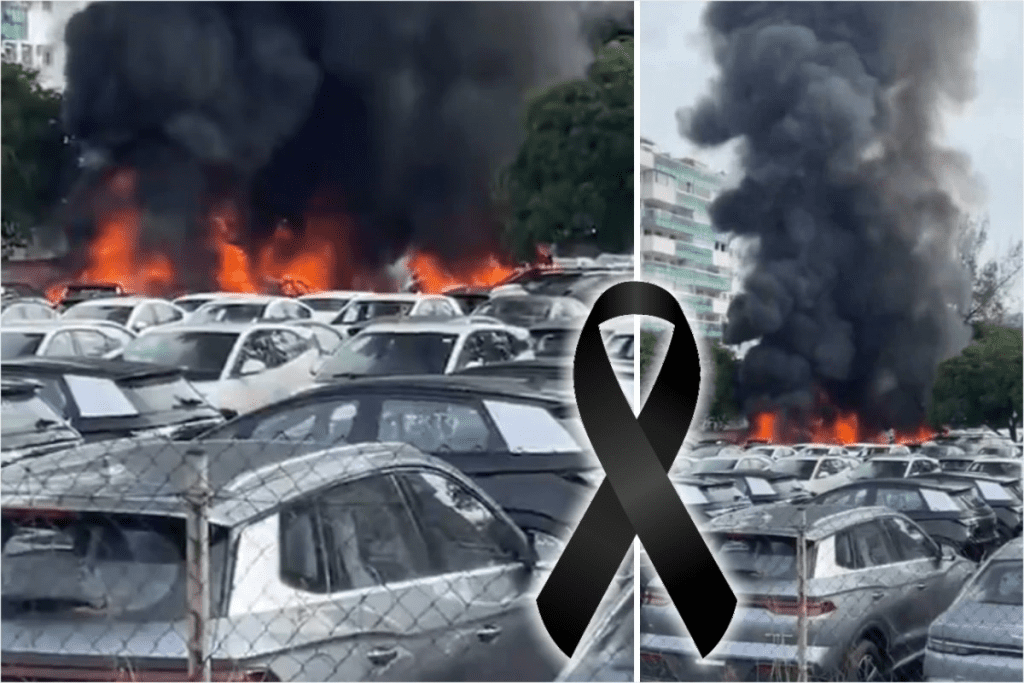
The video displays a static image composition divided into a few distinct visual sections. In the upper portion of the frame, there is a split-screen layout depicting an intense urban emergency. The top-left segment shows a massive fire raging behind a crowded parking lot full of cars. Bright orange flames erupt fiercely into the sky, creating a scene of immediate danger and chaos. Plumes of thick, dark grey smoke billow upward, partially obscuring the background view. A prominent, stylized black mourning ribbon is positioned right in the center, acting as a divider between the top two images. The top-right segment mirrors this catastrophic theme, showing another angle of a parking lot engulfed in large flames. In this right-side view, tall city buildings are visible in the background under an overcast sky. The dark smoke columns from the fire rise high above the rooftops, underscoring the severity of the disaster. The black ribbon clearly serves as a symbolic expression of grief or commemoration for a tragic event. Meanwhile, the lower half of the composition introduces a completely different element. It features two helicopters flying side-by-side against a vibrant blue sky filled with scattered white clouds. The helicopter on the left is painted in a clean white and dark blue color scheme. Its main rotor blades are spinning rapidly, though captured in a frozen, sharp state by the camera. The helicopter on the right is painted entirely in a matte black finish, giving it a sleek appearance. It bears the white number “03” distinctly marked on its side panel, along with text near the tail boom. Both aircraft appear to be in mid-flight, maintaining a close and stable formation next to each other. The contrast between the upper disaster scenes and the lower aviation scene is visually striking. The burning cars and heavy smoke convey destruction, while the helicopters suggest an organized response or a separate theme entirely. Despite the dramatic imagery, the video itself contains no actual motion within the visuals. The entire video functions as a still graphic presentation rather than a recorded moving clip. As the seconds tick by, the visual layout remains completely unchanged from start to finish. However, a continuous audio track plays throughout the duration of the video. The soundtrack consists of a low, ambient rumble layered with a soft, steady hum. This atmospheric sound design adds a serious and somber tone to the presentation. The audio helps to bridge the gap between the tragic fire images and the flying helicopters. It creates a sense of tension and solemn reflection for the viewer. Each element of the graphic—the flames, the smoke, the ribbon, and the aircraft—tells a piece of a story. The composition successfully captures the viewer’s attention through high-contrast imagery and symbolism. The bright fires stand out sharply against the darker tones of the smoke and the cars below. The blue sky in the lower section offers a momentary relief from the heavy atmosphere above. The white clouds provide texture to the background behind the two flying machines. The sleek design of both helicopters adds a modern, technical aspect to the overall image. The placement of the mourning ribbon suggests that lives may have been lost or impacted by the depicted event. The entire layout is structured neatly, with clear lines separating the different thematic components. The absence of movement forces the viewer to focus entirely on the details provided within the frame. The text on the black helicopter, though small, hints at an official or military designation. The reflections on the cars in the parking lot capture the intense glow of the nearby fires. The composition leaves the exact context of the tragedy open to interpretation by the audience. The combination of sound and still imagery creates a memorable, albeit tragic, visual experience. This concludes the detailed description of everything present within the provided video segment.