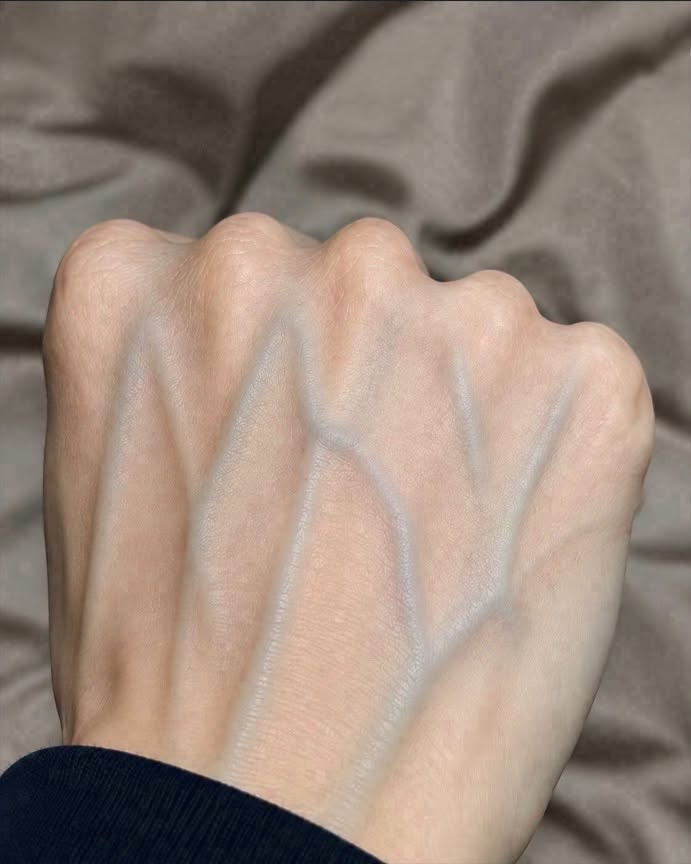
The image presents a close-up, top-down view of the dorsal aspect of a human hand clenched into a gentle fist. Belonging to an individual with a fair to light skin tone, the hand allows for high contrast with the underlying structures, making the intricate network of superficial veins bulging beneath the skin the most striking and prominent feature. These veins are highly visible, displaying a distinct, muted greenish-blue hue as they run across the back of the hand, which suggests a low body fat percentage, high physical fitness, or temporary vasodilation. They form a complex, branching pattern resembling the tributaries of a river or the root system of a plant; specifically, one main vein runs vertically up the left side of the hand, maintaining a relatively straight path toward the knuckles, while in the center, two major veins converge to form a noticeable “Y” or “V” shape just below the middle knuckle. Another vein branches off toward the right, fading slightly as it nears the edge of the hand near the pinky finger.
The skin covering these veins appears thin, smooth, and slightly translucent under the neutral lighting of the room, allowing fine skin textures, including microscopic lines and pores, to be visible across the entire surface. The knuckles at the top of the fist are softly rounded, showing the natural bone structure beneath, with a slight dimpling of the skin around the joint areas where the fingers bend. A small amount of fine, light hair is scattered across the skin, particularly near the base of the fingers and knuckles. At the very bottom of the frame, the dark blue or black cuff of a long-sleeved garment is partially visible, contrasting sharply with the pale skin tone of the wrist and hand.
The background consists of a soft, textured fabric, which appears to be a beige or light brown blanket or sheet that is gently wrinkled and folded, creating soft shadows and highlights that add depth. These neutral, warm tones of the background material help the cool tones of the veins stand out more dramatically under the soft, diffused lighting, which casts gentle shadows that define the contours of the hand without harsh reflections. The focus of the camera is incredibly sharp on the central part of the hand, capturing the fine details of the skin before transitioning into a soft, pleasing depth-of-field blur toward the edges and the background. This vertical composition centers the hand as the sole subject of artistic and anatomical interest, highlighting the superficial venous network, primarily involving the dorsal venous network responsible for draining deoxygenated blood back toward the heart. Ultimately, the tension in the clenched fist slightly compresses the tissues, making the veins stand out even more than usual, while the skin over the knuckles appears slightly tauter and lighter in color due to the underlying bone pressure, serving as an excellent, clear visual representation of superficial vasculature and healthy skin texture.