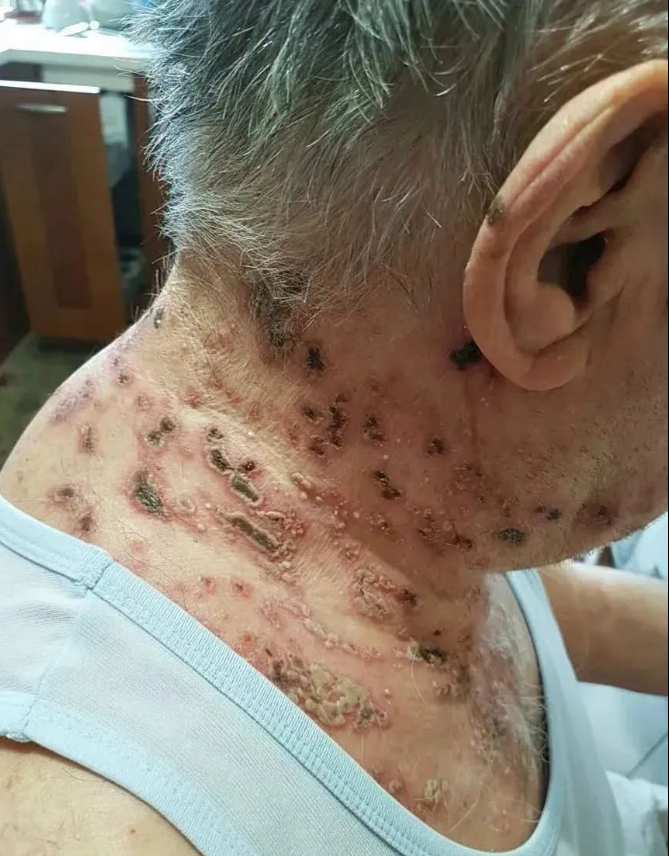
The image displays the lateral and posterior view of the neck, upper shoulder, and lower facial area of an elderly male patient suffering from an extensive and severe dermatological condition. The affected skin area exhibits widespread, confluent erythematous (red) macules and papules interspersed with numerous ruptured vesicles (blisters). These lesions have progressed into painful-looking ulcerations, with significant areas displaying thick, yellowish-brown crusting and scabbing, which strongly indicates a secondary bacterial infection or advanced tissue erosion. The distribution of the rash is highly concentrated, starting from the post-auricular region (behind the ear), tracking densely down the lateral aspect of the neck along the natural skin folds, and extending onto the supraclavicular area near the collarbone and upper chest.
Potential Pathological Indications
From a clinical standpoint, the localized, unilateral clustering of these painful, crusted blisters along a specific nerve pathway is highly characteristic of Herpes Zoster, commonly known as Shingles. This condition is caused by the reactivation of the varicella-zoster virus (the same virus that causes chickenpox) later in life, particularly in elderly or immunocompromised individuals. At this stage, the rash appears to have ruptured and dried, but the surrounding redness and heavy crusting suggest that it may be complicated by an active secondary bacterial skin infection (such as Staphylococcus or Streptococcus). While Shingles is the primary suspect, a definitive differential diagnosis by a specialist would also need to rule out other severe dermatological issues, such as infected contact or atopic dermatitis, bullous pemphigoid, or an adverse severe drug eruption.
Patient Discomfort & Urgency of Care
Important Note: A skin eruption of this magnitude and severity is invariably accompanied by intense physical distress. The patient is likely experiencing severe neuralgic pain, sharp burning sensations, throbbing, and persistent pruritus (itching) that severely impacts their quality of life, sleep, and daily movement.
Because the lesions are broken and exposed, the risk of systemic infection (sepsis) or permanent scarring is significantly elevated. Self-treatment or relying on home remedies in a case this advanced is highly dangerous and strongly discouraged. The patient requires immediate medical intervention at a hospital or an urgent care dermatology clinic. A professional healthcare provider will need to perform an accurate diagnosis—potentially through skin swabs or cultures—to prescribe the necessary high-dose antiviral medications, targeted topical treatments, and systemic antibiotics to control the infection and manage the debilitating nerve pain safely.