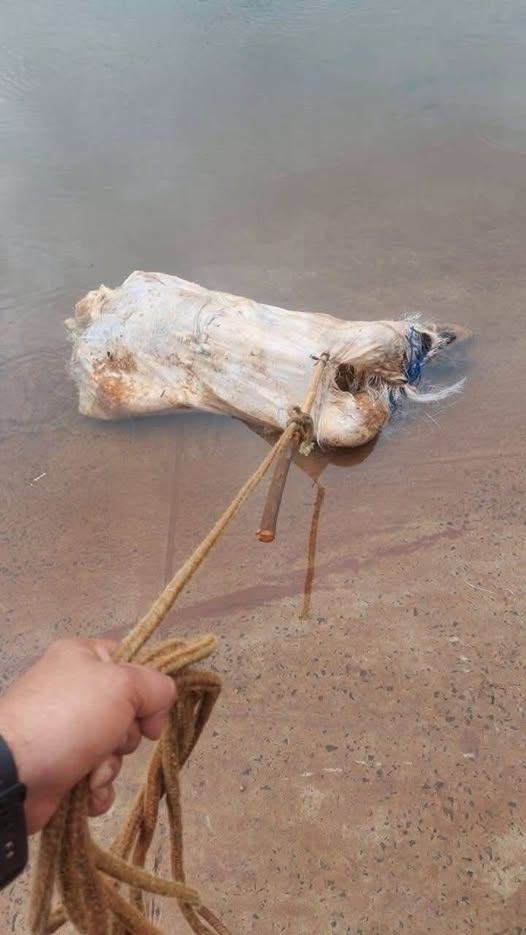
This compelling first-person perspective photograph captures a highly unusual and mysterious activity taking place along a quiet, shallow shoreline. The unique camera angle places the viewer directly in the shoes of the individual holding the line, creating an immediate sense of hands-on involvement in retrieving a strange floating object. In the bottom-left corner of the frame, a person’s hand is shown clamping down with a tight, firm grip around a thick, heavy-duty rope. The skin on the hand appears natural and lightly tanned, showing the physical effort and tension required to hold the weight of the wet line. On the wrist, a small portion of a black utility watch or strap is visible, adding a modern, practical element to an otherwise rustic scene. The rope itself is thick, coarse, and highly textured, made of braided natural fibers that appear weathered and slightly damp from the water. It loops and coils loosely within the person’s palm before extending diagonally upward toward the center of the image. At the end of this thick rope, a short, crude wooden stick is tied securely with a tight, heavy knot. This rustic wooden stick, roughly the size of a hand-span, functions as a toggle or anchor rather than a typical metal hook. It is wedged firmly into a natural opening or a sliced hole in the floating mass, acting as a clever, makeshift anchor to drag the object forward. This simple wooden device prevents the rope from slipping out as the user gently pulls the mysterious load through the calm water. Floating quietly in the shallow water is the primary subject of the photograph: a large, elongated, and somewhat cylindrical organic mass. The surface of this object is a mottled, pale greyish-white, heavily textured with folds, wrinkles, and discolored patches of beige and light brown. Its swollen, fatty appearance strongly resembles a thick piece of animal hide, bloated blubber, or perhaps a section of a processed carcass. The organic and heavy look of the material gives it a dense, solid presence as it drifts lazily on the water’s surface. At the far right end of the floating object, the shape tapers slightly and is tightly bound with a bright, vibrant blue synthetic nylon string. This modern plastic string contrasts sharply with the earthy, organic tones of the rest of the scene. Protruding from this bound section are distinct tufts of coarse, wet animal fur, displaying a mixture of black and white hairs. The presence of this wet fur strongly suggests that the object is made of animal skin, possibly serving as a specialized, homemade scent lure. Such lures are often used by local fishermen to attract crabs, fish, or other aquatic predators to a specific spot. The entire scene is set in extremely shallow, calm water that gently laps against a solid, flat shoreline. The water is remarkably clear, revealing a solid, dark brown bed directly beneath the surface. This underwater bed appears to be a flat concrete ramp, a stone slipway, or a heavily silted hard floor covered in fine mud and moss. The glassy stillness of the water creates a faint, soft reflection of the wooden stick and the rope, emphasizing the quietness of the moment. The overall lighting is soft and diffuse, typical of an overcast day, which prevents harsh shadows from obscuring the details. This even lighting allows every texture—from the rough fibers of the rope to the wet sheen on the floating hide—to be seen in sharp detail. The unpolished, candid nature of the photograph creates a raw, visceral atmosphere that sparks immediate curiosity. It leaves the viewer questioning the exact context of the image, wondering if it represents a traditional hunting method or a unique local fishing practice. The simple composition beautifully balances the human element of the hand with the mysterious, organic form of the floating target. Ultimately, the image serves as an intriguing snapshot of a primal, resourceful human interaction with the natural world along a quiet shoreline.