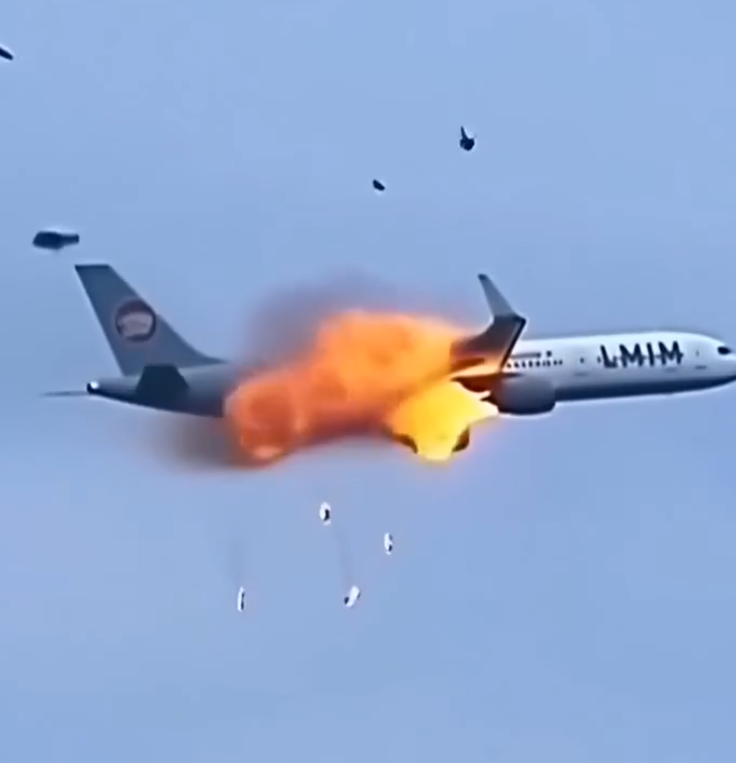
The video displays a terrifying aviation disaster where a commercial passenger airplane suffers a catastrophic mid-air explosion. The aircraft is flying through a pale, overcast sky when a massive fire suddenly erupts from its right engine and wing root area. Violent orange and yellow flames completely engulf the central fuselage section, spreading rapidly toward the tail. A massive cloud of thick, pitch-black smoke billows instantly from the point of explosion, trailing heavily behind the moving jet. The sheer force of the blast causes numerous structural fragments and debris pieces to break off from the fuselage. Several burning panels, shredded insulation, and metal parts are seen falling rapidly through the air toward the ground. The airplane appears to be a twin-engine narrow-body jet airliner with prominent winglets on its wingtips. The lettering on the front side of the fuselage reads “LMIM” or a similar distinctive corporate branding. The camera captures the terrifying event from a ground-level perspective, tracking the moving aircraft as it cruises horizontally. As the fire intensifies, the black smoke expands significantly, completely obscuring the rear half and the vertical stabilizer of the plane. Additional smaller secondary explosions seem to trigger within the wing structure, releasing bright sparks and fiery droplets into the sky. The structural integrity of the wing looks severely compromised as more pieces peel away under the extreme thermal pressure. The contrast between the dull, grey sky and the blinding radiance of the orange fire creates an intensely chilling visual scene. The falling fragments leave distinct trails of smoke as they plunge downward at high speed. The engine cowling appears to have completely disintegrated, exposing the burning core machinery to the rushing wind. The airplane continues to maintain a relatively stable horizontal flight path despite the catastrophic damage it is sustaining. The thick smoke column stretches into a long, dark canopy that paints a grim streak across the atmosphere. Every second of the clip reveals more debris shedding from the underbelly and the wing section of the jet. The atmosphere of the video is filled with a sense of ultimate danger, vulnerability, and impending tragedy. The camera remains relatively steady, keeping the burning airplane centered in the frame as it moves from left to right. The tail logo is partially visible before being completely engulfed by the rolling waves of dark soot. The fireballs expand periodically, likely fueled by the aircraft’s fuel tanks rupturing internally. The debris field in the air grows wider as the plane moves forward, leaving a trail of wreckage behind it. The wind shear at high altitude pushes the heavy smoke backward, creating a dramatic horizontal cone of pollution. The skeleton frame of the wing section looks incredibly vulnerable as the raging fire melts the aluminum support structures. The sheer volume of the flames suggests that the internal systems are completely compromised by the thermal shock wave. The video captures the precise moments when the aircraft transitions from a functional vehicle into a burning wreck. The density of the smoke is so great that it entirely cloaks the passengers’ window rows near the back. The flames lick the rear fuselage panels, threatening to consume the tail controls by the second. The entire scene is a chaotic montage of fire, dark smoke, falling debris, and failing aerospace infrastructure. The light from the explosion reflects intensely off the remaining white surfaces of the forward fuselage. The vertical lines of the tail fin contrast sharply with the chaotic, organic shapes of the swirling fireballs. The continuous shedding of the plane’s outer skin reveals the raw, burning internal architecture underneath. The perspective gives a horrifying sense of a major disaster unfolding in real-time over an unseen landscape. The speed at which the flames consume the wing root suggests an incredibly rapid acceleration of the fuel fire. The dark shadows within the smoke plume indicate that the internal combustion is highly inefficient and soot-heavy. The video concludes with the forward half of the airplane still pushing forward while completely dominated by the unstoppable trailing fire. This short, dramatic clip effectively conveys a nightmare scenario of modern commercial aviation failure and mechanical catastrophe. The bright orange color of the fire dominates the central third of the video frame, drawing immediate viewer focus. The people on the ground would undoubtedly be witnessing this massive blaze erupting high above their heads in complete shock. The small fragments falling from the sky look like dark confetti scattered against the vast backdrop of the clouds. The fire continues to burn fiercely at the wing joint, showing no signs of slowing down during these few seconds. The contrast between the clean white nose of the plane and the destructive tail fire creates a powerful visual narrative. The remaining wing appears to be struggling to maintain aerodynamic lift as the structure warps from the heat. The continuous disintegration of the aircraft parts testifies to the violent forces involved in the mid-air failure. The camera maintains a steady hold, preventing any jarring movements from disrupting the observation of the aviation emergency. The primary explosion point remains the main focal focus of the video’s naturally dramatic layout. This short sequence leaves a lasting, harrowing impression of the raw force and danger of in-flight fires. The final frames emphasize the massive cloud of soot that now completely replaces the tail section of the aircraft. This tragic sequence effectively documents a major mechanical mishap involving a heavy passenger transport vehicle.