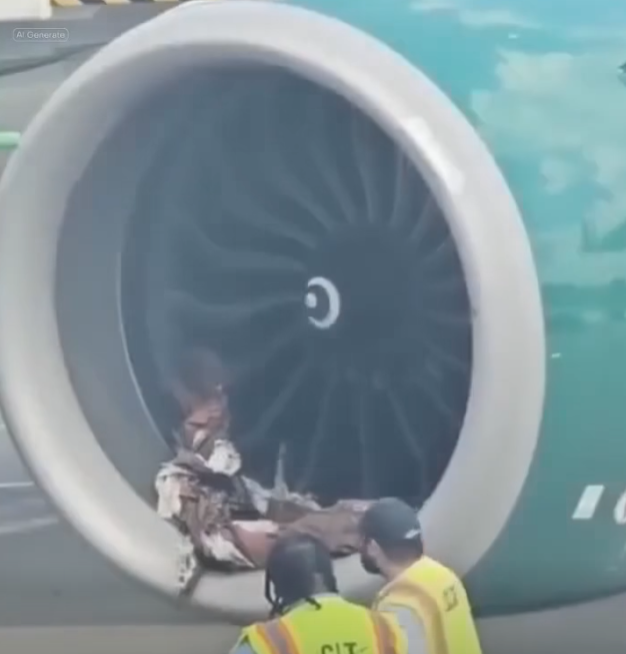
The video opens with a tight close-up focusing directly on the massive intake of a commercial airplane engine. This particular aircraft part is painted a distinct and vibrant teal or light green color, making it stand out sharply. Inside the lower curved edge of the engine cowl, a large clump of debris is wedged tightly. The debris consists of shredded organic material that looks like the remnants of a large bird or animal. This alarming sight suggests that a serious bird strike has occurred during a recent flight or taxi process. The black turbine blades inside the engine housing are completely stationary, indicating that the power is turned off. A subtle spiral pattern is painted in bright white on the central cone of the turbine assembly. Standing directly in front of the engine are two airport ground crew workers who are examining the situation. One worker is a man with long braided hair wearing a light blue short-sleeved collared shirt. He is also wearing a bright neon yellow safety vest with the black letters “CLT” printed on the back. Next to him stands another ground crew member wearing a dark baseball cap and a similar neon safety vest. This second worker has a neatly trimmed beard and is looking intently at the damaged engine intake. They appear to be discussing the severity of the debris and what steps are needed to clean it. The sound of distant aircraft engines or airport machinery can be heard humming continuously in the background. The atmosphere on the concrete tarmac feels serious and professional as the inspection takes place. A third person, a man with short dark hair, briefly walks into the frame from the left side. He also appears to be an airport employee or observer interested in the engine’s condition. The camera remains fixed in a steady, unmoving position to capture the detailed view of the inspection. The lighting suggests that it is a bright, clear day at the busy airport facility. The contrast between the clean teal paint and the messy debris inside the engine is very stark. The ground workers maintain a calm demeanor despite the potentially costly damage to the aircraft. They stand close together, peering into the dark recesses of the turbine housing to assess any blade damage. The detailed texturing on the engine’s surface reveals minor scuffs and wear from normal flight operations. The “CLT” lettering on the vest likely stands for Charlotte Douglas International Airport, indicating the location. This video highlights the unexpected and dangerous operational challenges faced by aviation maintenance teams daily. The sheer size of the engine intake emphasizes the immense power behind modern commercial jet aircraft. The presence of the organic debris underscores the constant hazard that wildlife poses to safely operating flights. The ground crew members do not make any immediate attempts to physically remove the debris by hand. They simply stand there, evaluating the scene before calling for specialized tools or a cleaning crew. The silver metallic rim of the engine cowl glints softly under the natural overhead daylight. The video maintains a high level of visual clarity, allowing every detail of the wreckage to be seen. It provides an insightful, behind-the-scenes look at airport safety protocols following an incident. The stillness of the turbine blades ensures that there is no immediate mechanical danger to the workers. The background scenery remains out of focus, keeping the entire narrative centered on the compromised engine. This documented moment captures the meticulous nature of pre-flight or post-flight aircraft inspections. The workers’ safety vests ensure they remain highly visible to other moving vehicles on the active tarmac. The dark hair of the first worker is styled in neat, thick braids that hang down his back. The second worker keeps his hands near his waist as he analyzes the structural integrity of the components. Every frame reinforces the importance of thorough maintenance checks in the commercial airline industry. The video serves as a reminder of how vulnerable complex machines can be to natural elements. The white spiral on the nose cone remains a striking geometric detail amidst the chaotic organic mess. The brief clip concludes while the two men are still actively engaged in their technical assessment. It leaves the viewer with an appreciation for the professionals who ensure the safety of air travel.