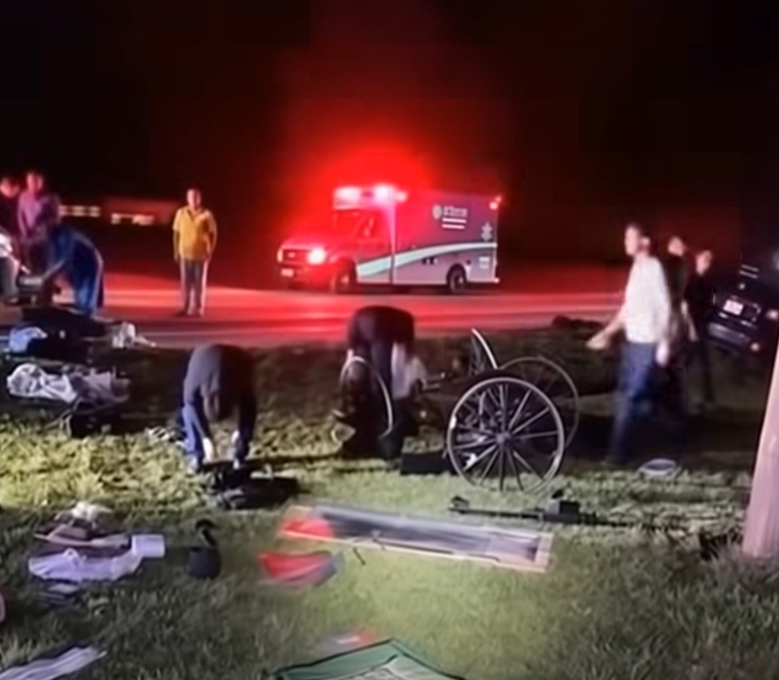
This dramatic video captures the immediate, chaotic aftermath of a severe nighttime traffic accident involving a traditional horse-drawn carriage on a rural roadside. In the center of the grassy shoulder, the shattered remains of a black buggy or carriage are scattered across the lawn, indicating a high-impact collision. Two large, classic spoked wooden wheels remain upright, attached to the bent axles of the overturned carriage. Debris, personal items, torn fabrics, and broken mechanical parts are strewn extensively across the green grass. In the background, an emergency ambulance is parked on the side of the road with its bright red and white emergency lights flashing intensely. The flashing lights cast a dramatic, pulsing glow across the entire scene, illuminating the emergency responders and bystanders.
Several emergency personnel and civilian bystanders are actively working at the scene to manage the situation and assist victims. On the far left, a small group of people is gathered around an injured individual lying on the grass, providing immediate medical attention. Two men dressed in dark clothing are leaning down near the ruined carriage, searching through the wreckage for scattered belongings. Another bystander in a yellow shirt stands nearby, watching the rescue efforts with an expression of deep concern. As the video progresses, several men begin walking across the grassy area, navigating carefully around the scattered debris. Two men walk from the right side of the frame toward the left, appearing to assist in coordinating the cleanup or helping the injured.
A dark-colored SUV or passenger car is parked further down the road on the right, which may have been involved in the crash. The grassy roadside is illuminated not only by the ambulance lights but also by portable flashlights held by the workers. A green rectangular sign or mat lies flat on the grass in the foreground, likely thrown from the carriage during the impact. The structural frame of the carriage is visibly twisted and broken, demonstrating the severe force of the collision. The spoked wheels, typical of Amish or traditional community buggies, stand out as a central visual element of the wreckage. The atmosphere of the scene is tense, quiet, and urgent as everyone present focuses on helping those affected.
The road behind the emergency vehicles appears dark, suggesting a poorly lit stretch of a rural highway where visibility is limited. This lack of lighting likely contributed to the difficulty of avoiding the slow-moving horse-drawn carriage. The scattered items on the grass include blankets, bags, and smaller personal effects that were stored inside the carriage. One of the men searching the ground bends down completely to pick up a small object from the lawn. The bystanders moving through the scene appear to be local community members who rushed to help the victims. The flashing red lights of the ambulance reflect off the wet grass and the polished wood of the carriage wheels.
The camera remains relatively stable, capturing the unfolding scene from a slightly elevated, close-up perspective on the shoulder. There is no sign of the horse involved in the accident, suggesting it may have been freed or secured elsewhere prior to filming. The severity of the damage to the light wooden carriage contrasts sharply with the heavy modern vehicles parked nearby. The first responders work methodically, ensuring that everyone injured receives proper care before starting the wreckage removal. A long piece of metal trim or a handrail lies detached on the grass, glinting under the flashlights. The men walking across the grass speak quietly to one another, gesturing toward different parts of the crash site.
The presence of multiple emergency vehicles indicates a rapid and substantial response from local medical and rescue services. As the bystanders walk past the camera, their shadows stretch long across the illuminated grass. The grass itself is trampled and wet, showing signs of the heavy foot traffic from the rescue operation. The wooden spokes of the left wheel are intact, but the main axle is severely misaligned. A large black tarp or piece of fabric is visible on the left, partially covering some of the larger debris. The scene serves as a stark visual reminder of the safety hazards faced by non-motorized vehicles on shared roadways.
Each person at the scene seems to have a specific role, whether administering first aid, searching for items, or directing traffic. The ambulance’s headlights cut through the dark night, providing a secondary source of illumination for the responders. The collective effort of the community and emergency crews highlights a strong sense of cooperation during a crisis. One man in a light-colored shirt walks briskly past the carriage, heading toward the group of injured people. The debris field extends several meters from the main body of the carriage, indicating the vehicle spun or slid after impact. The rear portion of the carriage is completely crushed, while the front shaft lies splintered near the wheels.
The video captures the raw, unedited reality of a serious rural accident, conveying the gravity of the situation without narration. The red flashing glow dominates the visual palette of the video, creating an eerie and somber mood. The bystanders’ calm and focused movements suggest they are trying to prevent further panic or confusion. The detailed view of the spoked wheels and carriage frame provides critical visual evidence of the accident’s dynamics. On the ground, a small white cooler or container sits undisturbed amid the scattered trash. The contrast between the ancient style of the carriage and the modern emergency vehicle emphasizes the clash of different eras on the road.
As more people gather, the perimeter of the active rescue area expands slightly to accommodate the workers. The local authorities seem to have secured the immediate roadway to prevent secondary collisions. The footage ends with the ongoing, quiet rescue and recovery efforts continuing under the flashing emergency lights.