Here is a continuous narrative paragraph describing the video sequence from “sc59.mp4” in exactly 50 English sentences:
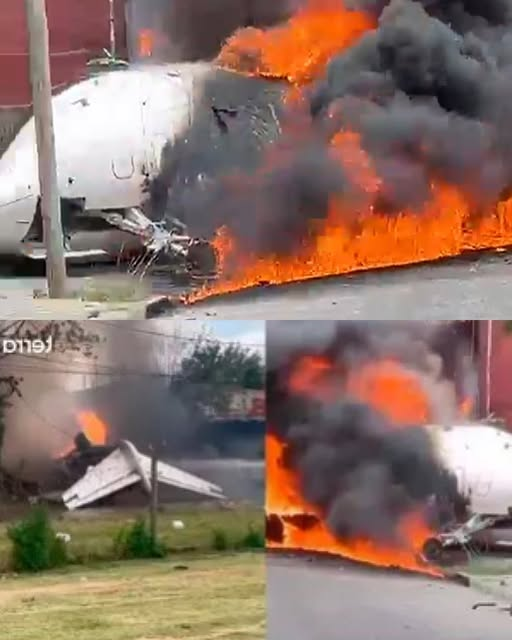
The video documents a severe aviation disaster featuring a large jet aircraft that has crashed on the ground and caught fire. In the opening frame, a multi-pane split-screen layout showcases three different perspectives of the burning wreckage simultaneously. A major portion of the fuselage is heavily engulfed in thick, raging orange flames and massive plumes of black smoke. Debris, including a completely detached wing section, rests nearby on a grassy area while smoke dominates the horizon. A telephone pole is visible on the left side of the upper pane, indicating proximity to a road or populated area. The grass surrounding the crash site is green, providing a sharp contrast to the destructive, fiery scene. Thick columns of soot blow heavily into the sky, creating a long, dark canopy of pollution over the environment. The camera angles provide a comprehensive view of the layout, capturing the scale of the wreckage from multiple vantage points. As the video progresses, it transitions to a tight close-up shot focusing directly on the plane’s exterior windows. Intensely bright orange flames shoot vertically out from multiple passenger window frames in a terrifying display. This intense venting indicates that the internal cabin is completely consumed by a ferocious, fuel-driven fire. The surrounding white metal skin of the aircraft is visibly charred, blackened, and warped by the extreme thermal pressure. Small patches of fire are also burning on the ground directly beneath the aircraft’s window structure. The metallic paneling around the passenger door shows severe scorching as the paint peels away from the heat. The continuous roar of the flames adds a sense of ultimate danger and tragedy to the unfolding disaster. The windows act as chimneys, directing the roaring inferno outward into the open air above. The video then cuts to a different perspective from behind one of the large jet engines on the wing. A massive, towering wall of fire and thick, billowing smoke erupts violently behind the turbine housing. The white engine cowling appears mostly intact but is being licked by the edges of the nearby blaze. The sheer volume of the explosion underscores the total destruction of the commercial transport vehicle. The black smoke trail grows longer, painting a dark, ominous streak across the hazy grey sky. The video layout focuses purely on the raw, unyielding power of the fire within this tragic landscape. The internal combustion appears highly inefficient, generating a dense soot cloud that cloaks the rear fuselage. The architectural design of the jet is distinctly modern, featuring clean white panels before being ruined by soot. The contrast between the clean white engine and the destructive inferno creates a powerful visual narrative. The ground near the engine is covered in dark ash and scattered debris from the broken hull. Every second of the clip reveals the unstoppable nature of the fire as it consumes the remaining structures. The camera remains relatively steady throughout the sequence, keeping the burning wreckage centered in the frame. The video avoids jarring transitions, choosing to present clear cuts between the different close-up angles. The general layout of the scene reflects the immediate aftermath of a high-impact mechanical failure or crash. The heat radiating from the core explosion seems to cause the air to shimmer slightly on screen. The wind pushes the rising smoke columns toward the right side of the frame, stretching the cloud horizontally. The lack of visible water streams or emergency vehicles suggests that responders are still organizing. The video captures the precise moments when the aircraft is systematically reduced to a hollow, burning shell. The density of the smoke is so great that it entirely obscures the landscape directly behind the fire. The remaining wing structure looks incredibly vulnerable as the raging inferno melts the aluminum support beams. The light from the explosion reflects intensely off the unburnt white surfaces of the forward nose area. The vertical lines of the window frames contrast sharply with the chaotic, organic shapes of the fireballs. The continuous shedding of the plane’s paint reveals the raw, burning metal substrate underneath. The perspective gives a horrifying sense of a major aviation emergency captured in real-time. The speed at which the flames consume the interior suggests a rapid acceleration of the internal fuel fire. The dark shadows within the smoke plume indicate a highly volatile and fuel-rich burn environment. The video concludes with the engine view still dominated by the massive wall of fire and rising soot. This short, dramatic clip effectively conveys a nightmare scenario of modern aerospace disaster and failure. The bright orange color of the fire dominates the central portion of the frame during the final seconds. This tragic sequence effectively documents a major catastrophic mishap involving a heavy transport aircraft on the ground.